Back pain is a very common condition in kids. By some estimates, 20-70% of kids experience some type of back pain. In the past, back pain was sometimes accepted as unpleasant but mostly harmless part of growing up. However, new research is showing that even back pain from benign causes may be correlated with worse overall health in kids.
A study in Australia asked several thousand teenagers about their back pain and their quality of life. Researchers hoped to see whether benign back pain, which is common in kids, could have wider implications for kids’ health.
The researchers were surprised to find that back pain isn’t just annoying, it is also associated with a multitude of poor health indicators.
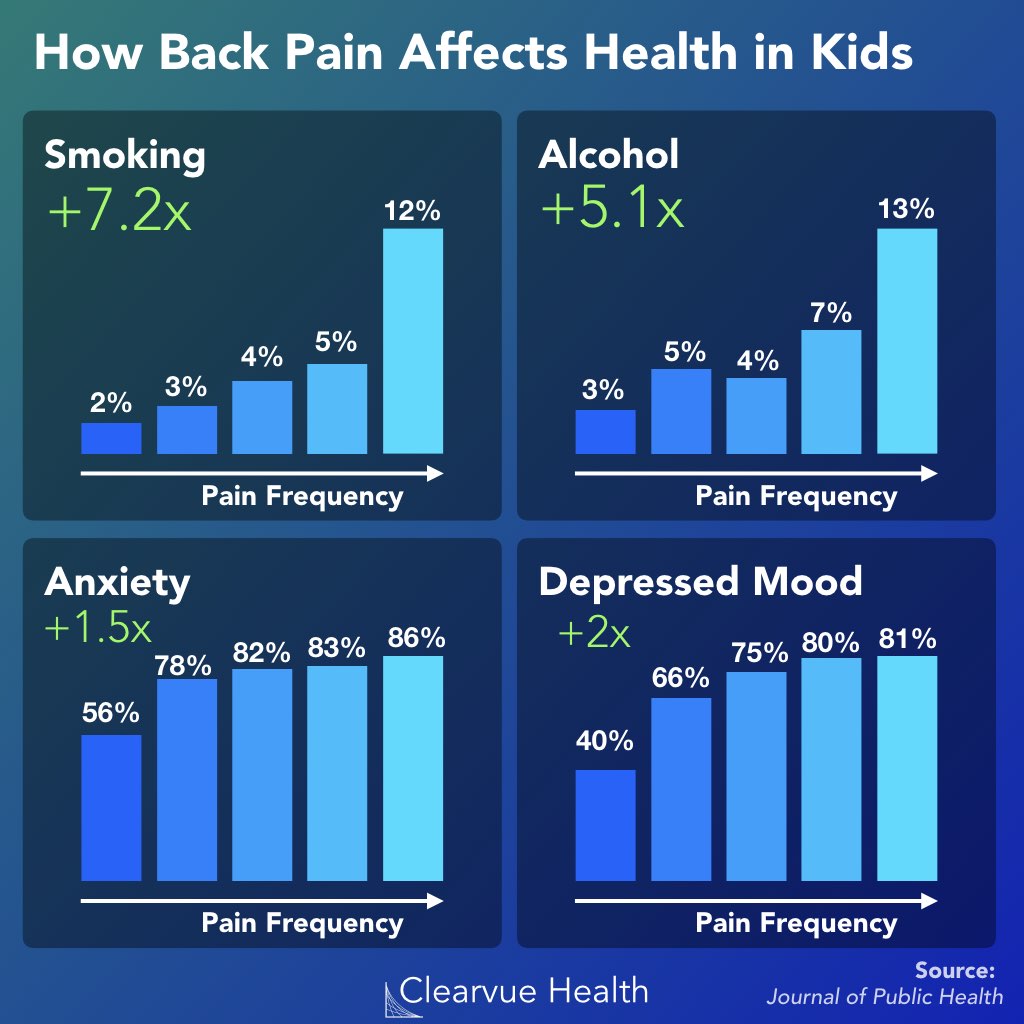
Kids who had back pain nearly every day were five times more likely to drink and seven times more likely to smoke than their peers who rarely or never had back pain.
These kids were also 50% more likely to have anxiety and twice as likely to experience depressed moods than their peers who rarely or never had back pain.
The frequency of pain also mattered. The researchers found that the prevalence of smoking, drinking, anxiety, and depressed moods increased with increasing pain frequency in a pattern that scientists call a “dose-dependent response.”
What we don’t know for sure is whether the back pain is directly causing poorer health indicators, or whether the kids who had more back pain just happened to have worse health. What we can conclude from this data is that kids with more back pain also had worse health.
This adds to a growing body of evidence that pain is a real symptom that needs to be treated. Like any other symptom, it can be a sign of a more serious condition and can lead to serious health consequences.
Fortunately, there are some great ways to treat pain. We’ve summarized two scientifically validated methods to treat pain in kids below.
As always, if you or your child is experiencing pain, talk to your doctor first. While most pain is benign, there are some less common but potentially dangerous causes of pain that your doctor can and should check for.
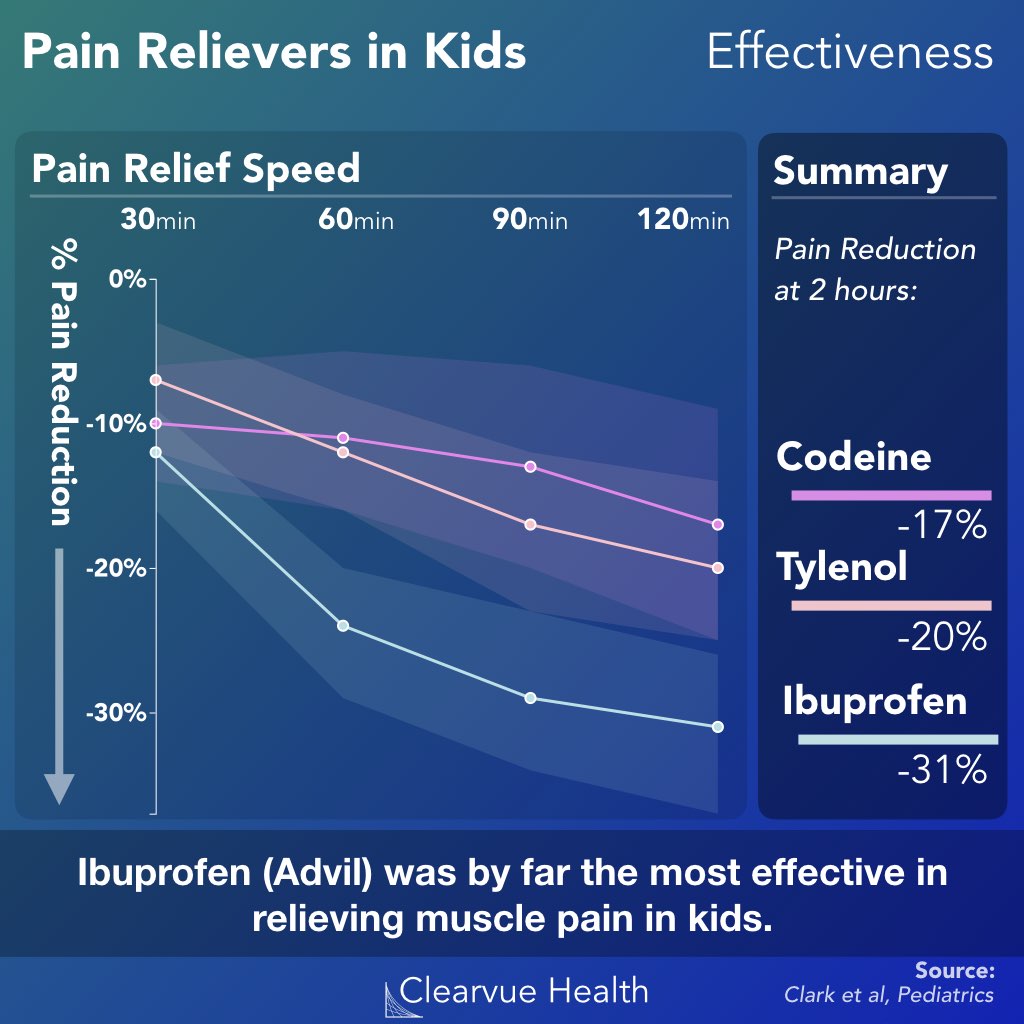
Two commonly recommended over-the-counter medications to treat short term pain episodes in kids are Acetaminophen (Tylenol) and Ibuprofen (Advil).
A study in the journal Pediatrics looked at which type of over-the-counter medication is most effective at treating musculoskeletal pain, including back pain, in kids.
Ibuprofen was found to be by far the best treatment for musculoskeletal pain in kids. It works the fastest and shows the highest decreases in pain.
Acetaminophen (Tylenol) and Codeine were also studied. Codeine and acetaminophen (Tylenol) were both found to be similarly less effective than ibuprofen, but still managed to reduce pain in kids. Of note, codeine is not typically recommended for treating pain in kids.
These medications are not recommended for long term pain relief. Taking too much or taking these medications for too long can cause serious health issues.
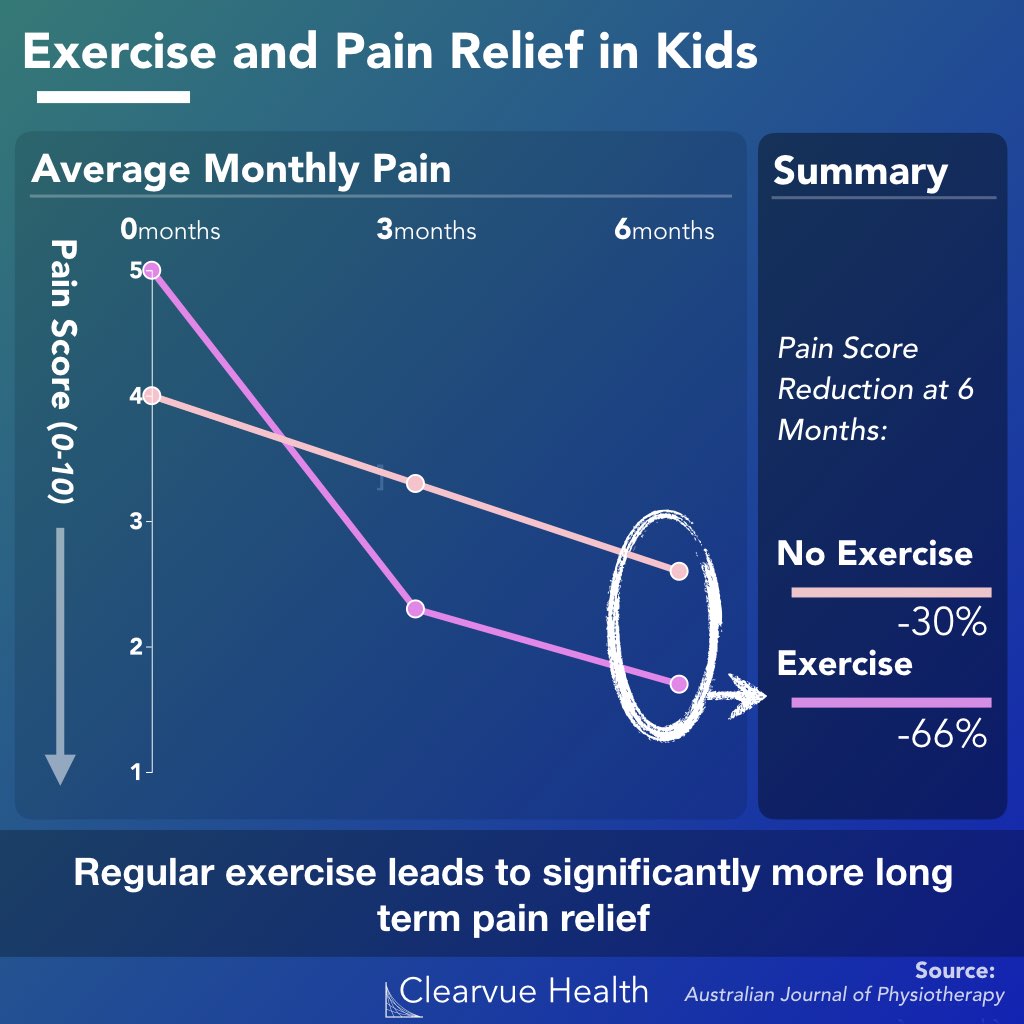
For long term pain relief, one of the best treatments is exercise. A study looked at whether exercise programs could help speed up recovery from pain over several months. Out of 72 kids, 39 were randomly selected to receive an exercise program over 8 weeks from a physiotherapist.
Over 6 months, these kids were found to have experienced approximately twice the pain relief as their peers who were not selected for the program.
This showed that exercise, and not bed rest, was effective in reducing pain over the long term.
Of course, talk to your doctor before starting a new exercise program. Additionally, consider finding a physical therapist who can tailor an exercise program to optimize recovery.